
QoS | Scale Boundaries
Scale is not simply adding machines. More teams should share one governance method while tenant isolation, quotas, cost, and ownership remain explicit.
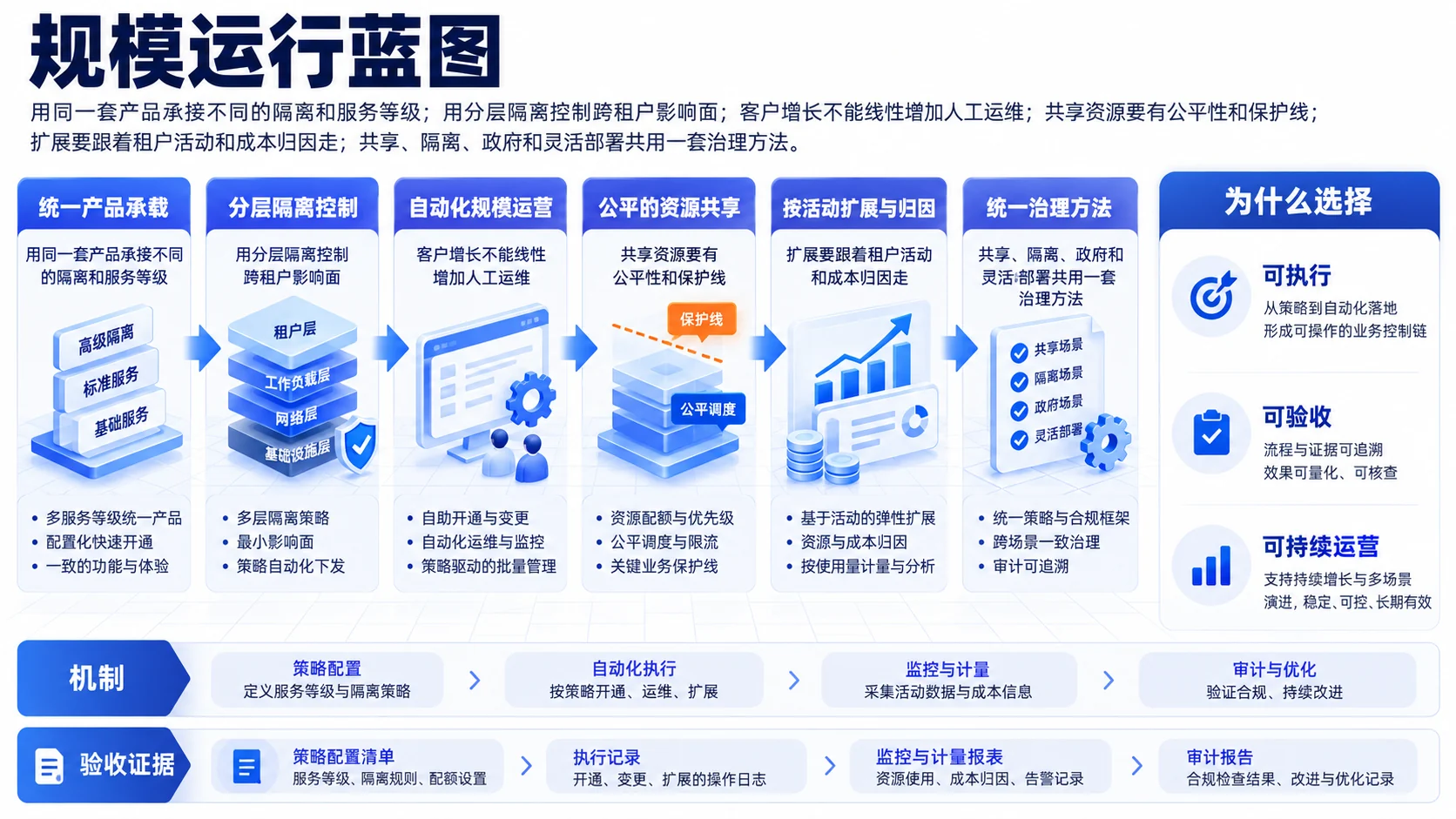
Tenant tiers
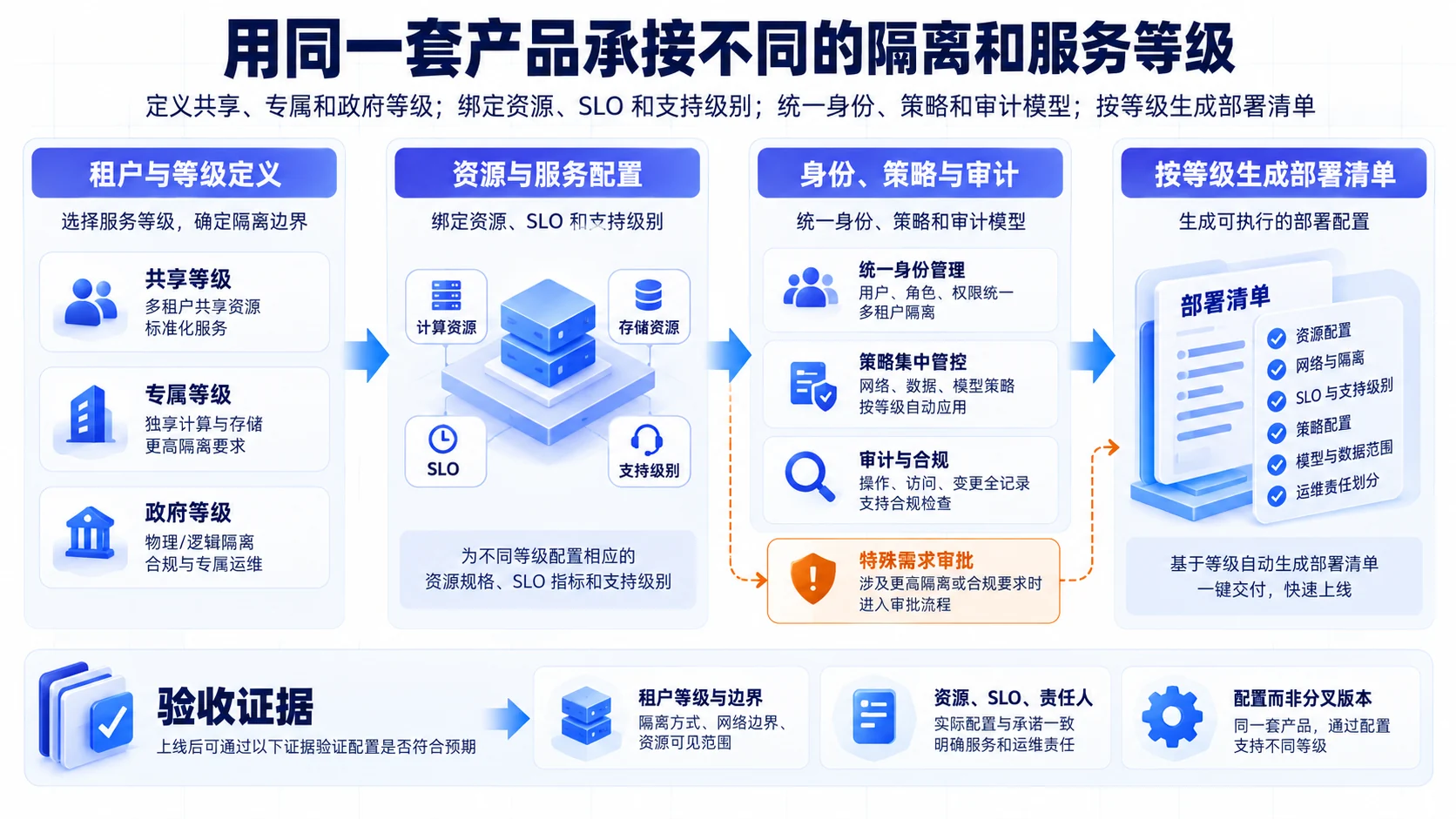
Serve different isolation and service tiers through one product
Make tenant, workspace, data, model, and operations tiers configurable so customers do not require one copied product each.
Execution steps
- 01
Define shared, dedicated, government tiers
- 02
Bind resources, SLO, support
- 03
Unify identity, policy, audit
- 04
Generate deployment checklist by tier
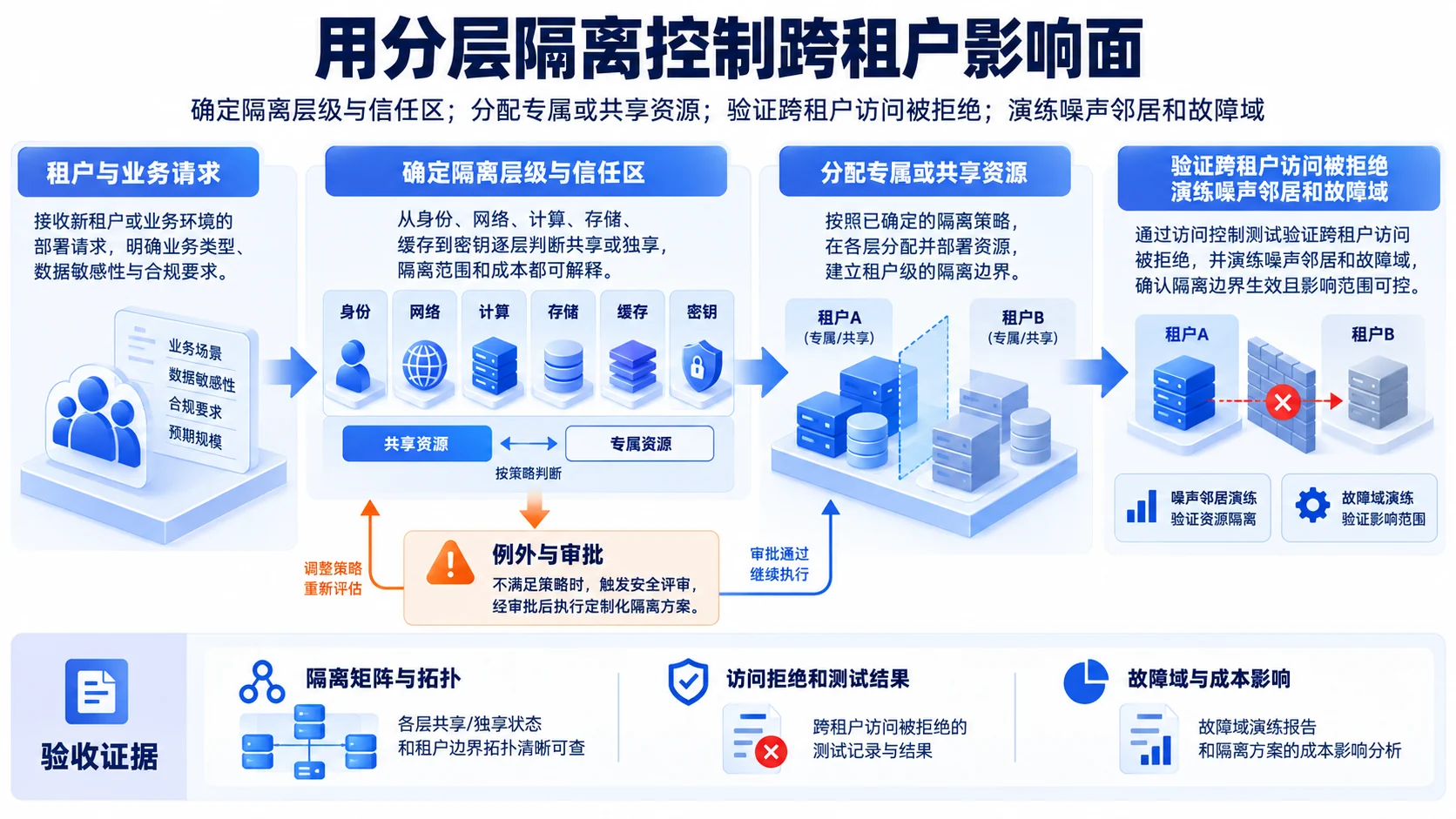
Isolation cells
Control cross-tenant blast radius with isolation cells
Evaluate shared or dedicated boundaries across identity, network, compute, storage, cache, and keys with explicit cost.
Execution steps
- 01
Set isolation layers and zones
- 02
Assign dedicated or pooled resources
- 03
Test cross-tenant denial
- 04
Exercise noisy neighbor and fault domain
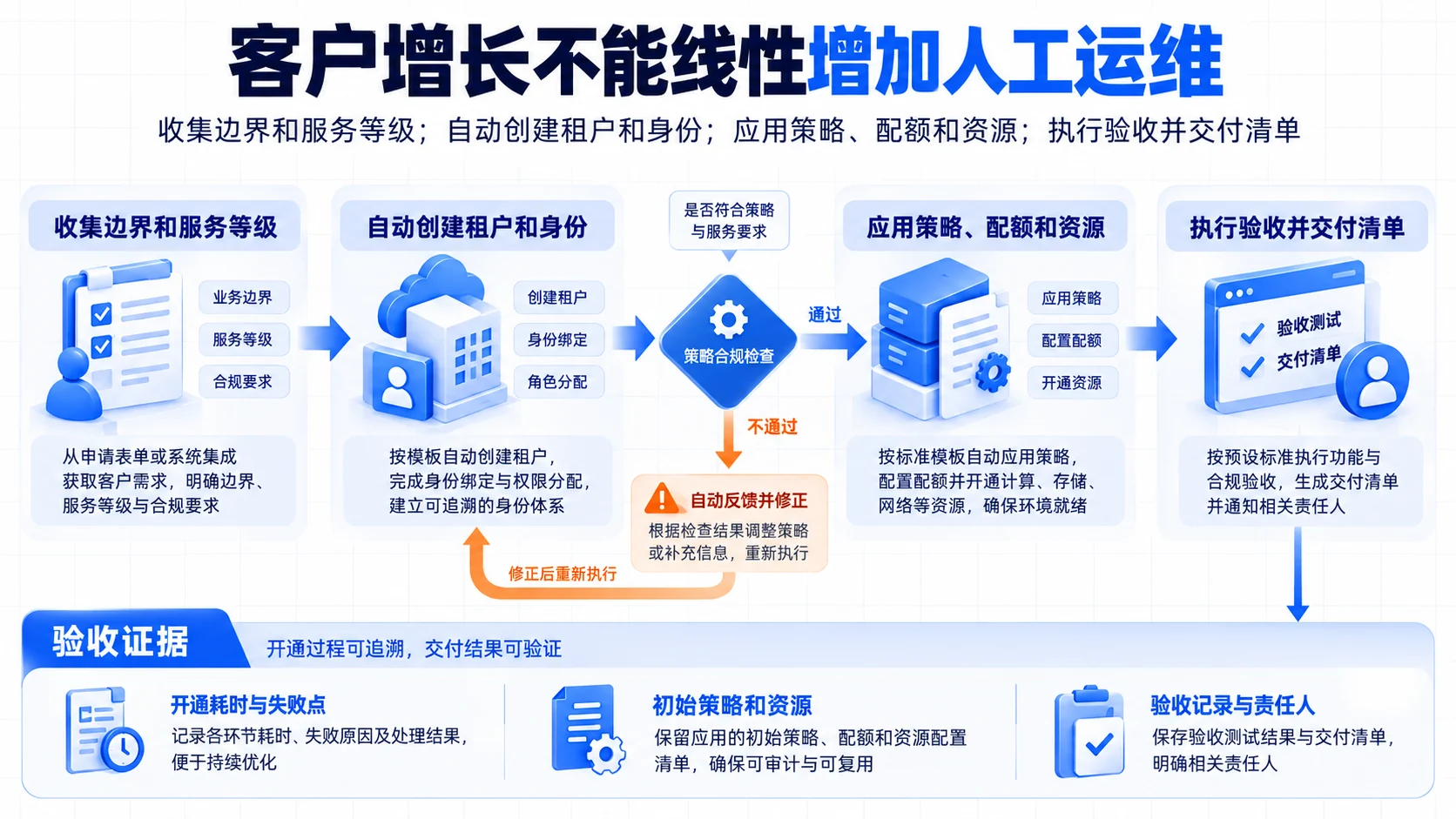
Automated onboarding
Do not let customer growth scale manual operations linearly
Make tenant creation, identity binding, policy initialization, resource setup, testing, and handoff repeatable.
Execution steps
- 01
Collect boundary and service tier
- 02
Create tenant and identity
- 03
Apply policy, quota, resources
- 04
Run acceptance and handoff checklist
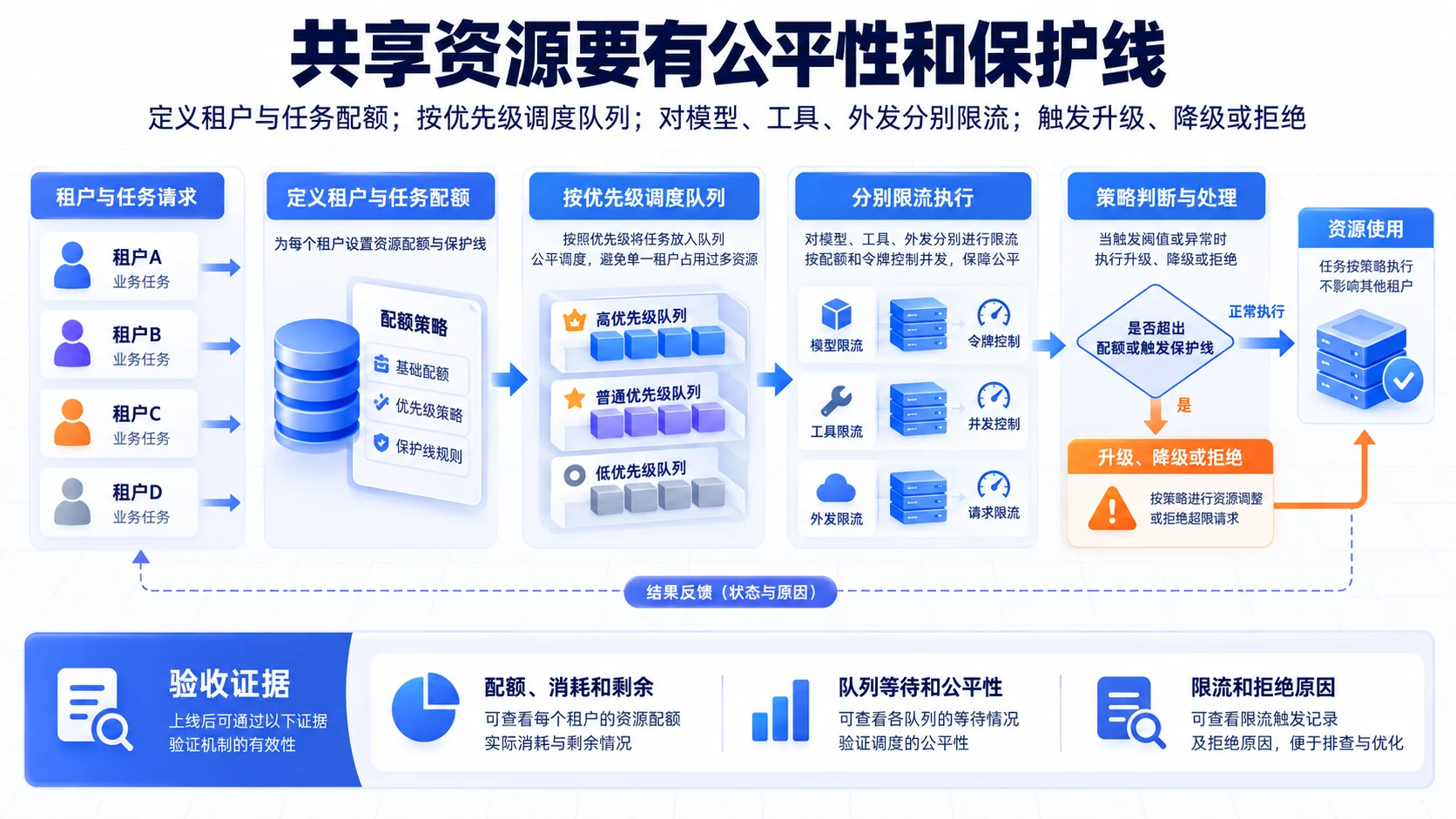
Queues and quotas
Make pooled resources fair and protected
Use queues, concurrency, tokens, priority, and throttling to allocate resources and prevent one tenant from affecting the whole system.
Execution steps
- 01
Define tenant and task quotas
- 02
Schedule queues by priority
- 03
Throttle model, tool, egress
- 04
Escalate, degrade, or reject
Elasticity and cost
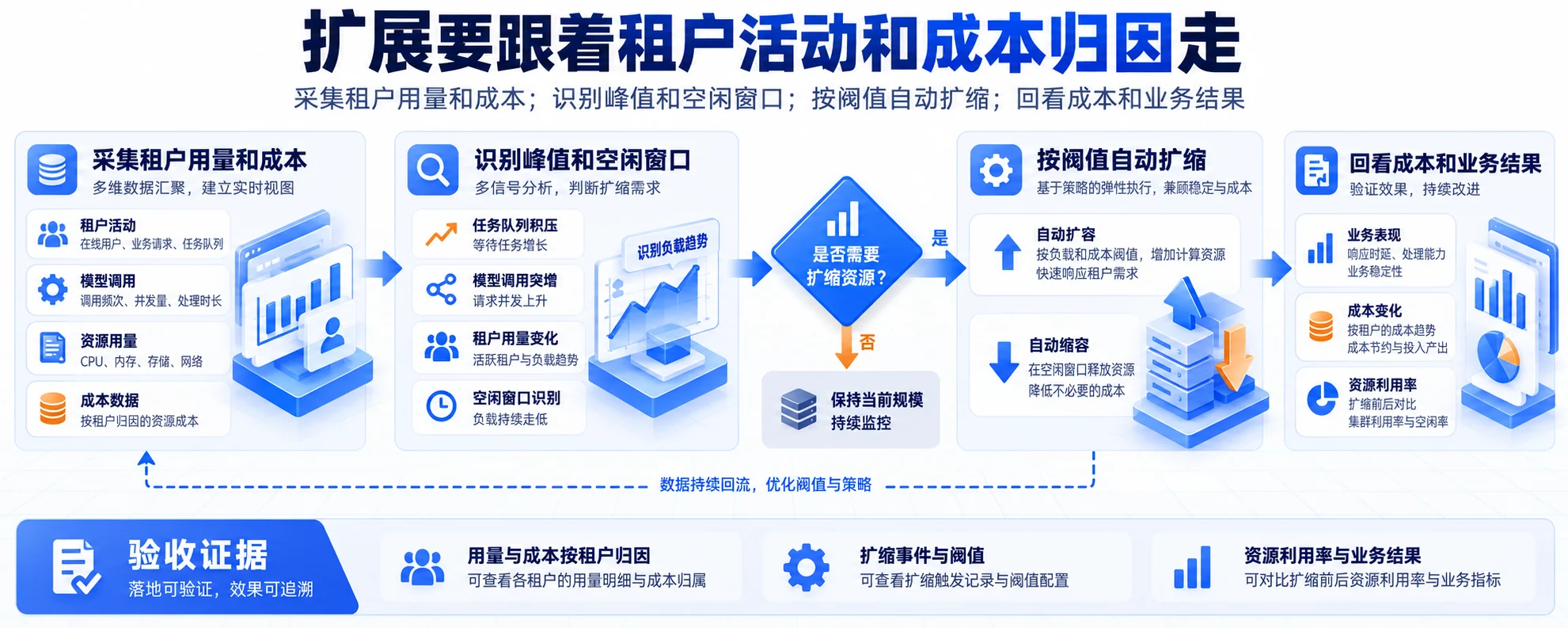
Scale with tenant activity and cost attribution
Scale on queues, model calls, tenant usage, and cost—not only CPU—so resource choices are explainable.
Execution steps
- 01
Collect tenant usage and cost
- 02
Identify peaks and idle windows
- 03
Scale out/in by threshold
- 04
Review cost and business result
Deployment mix
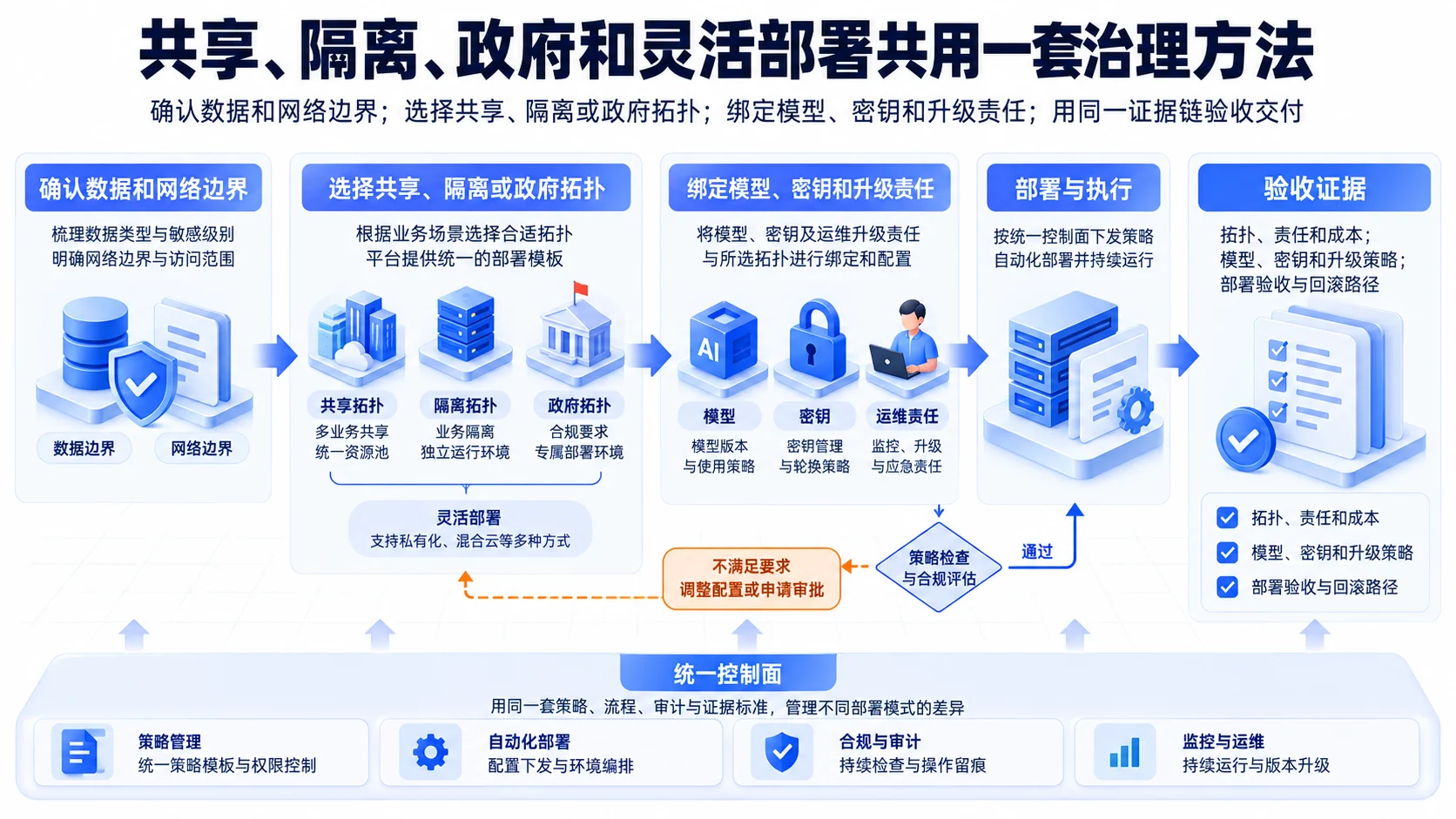
Use one governance method across deployment modes
Deployment modes combine data, network, model, key, and operations ownership; one control plane manages the differences.
Execution steps
- 01
Confirm data and network boundary
- 02
Choose shared, isolated, or government topology
- 03
Bind model, keys, upgrade owner
- 04
Accept with the same evidence chain
Bring Scale requirements into a real evaluation
We map the principle to an acceptance checklist for your data, workflow, deployment boundary, and owners.
Region, data, model, operations, and acceptance requirements still need to be confirmed item by item in the project assessment.